Chingford School of Tennis
At Chingford School of Tennis, the courts represent more than sport. They represent continuity, community and a legacy built over decades.
The school was founded in 1986 by Hilary McDowell’s late husband, Patrick McDowell — a semi-professional footballer and lifelong tennis player who competed at Junior Wimbledon — on a simple philosophy: tennis should be accessible and inclusive for all. What began with two courts and beginner coaching, CST grew steadily; as players improved, stronger players arrived, and the club evolved into a thriving tennis school serving juniors and adults of every ability, from grassroots participants to international competitors.
Following his passing in 2013, Hilary and her son Matthew have continued the work, preserving both the club and the vision behind it. Today, Chingford School of Tennis remains rooted in its founding ethos: tennis for everyone.
Background
Operating in England’s climate has always required resilience. To keep coaching and play through the winter, the club installed its first Covair dome in 1991 on the original site in North Chingford. For ten years, that single-skin structure enabled year-round operation and protected the club’s programming — but as participation grew, capacity began to limit what the club could offer.
In 2001, the club moved to its present site, with 9 courts. Another single-skin Covair dome was purchased over 3 of the courts and participation from current and new members plus much of the local community increased usage considerably.
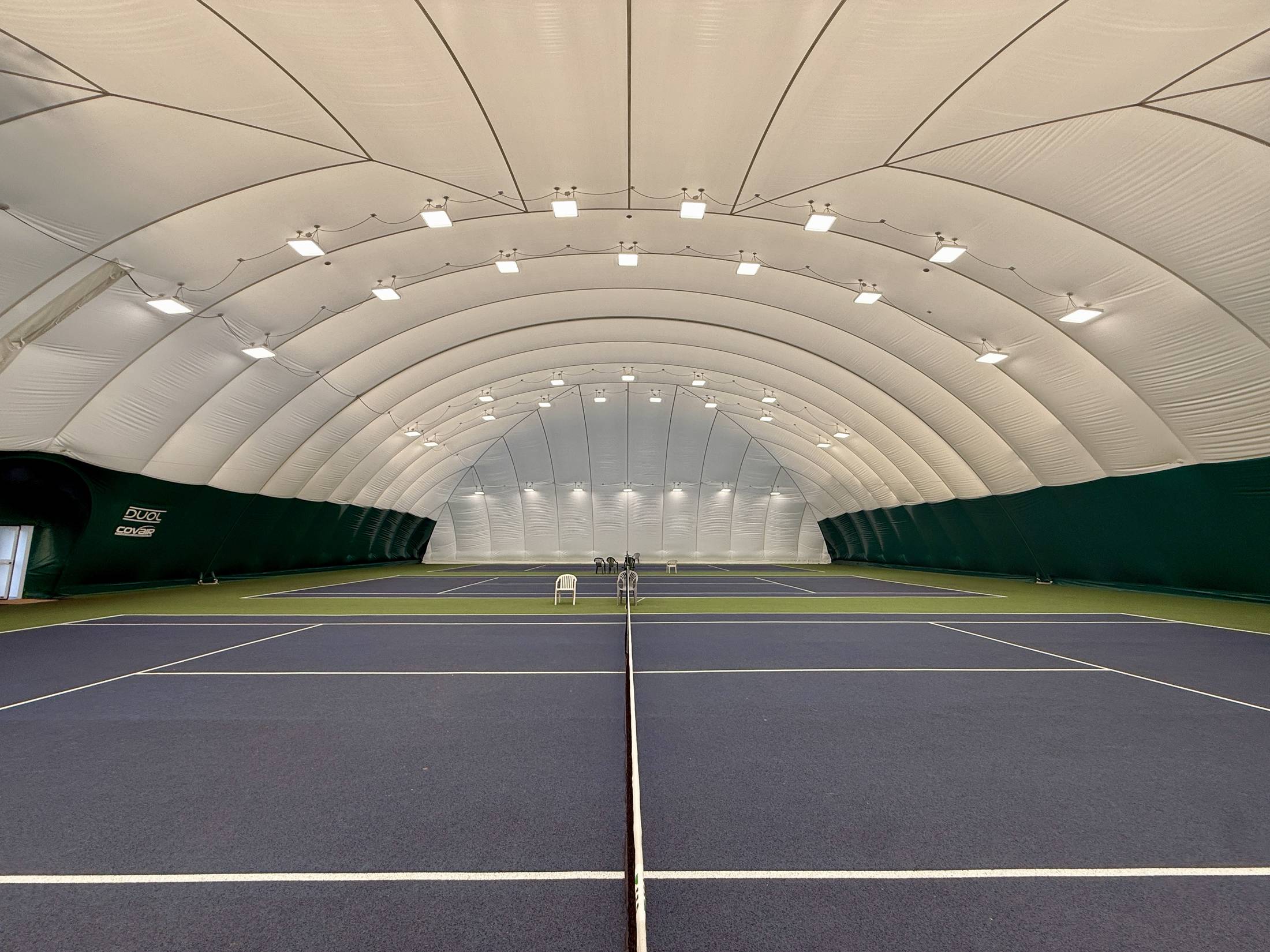
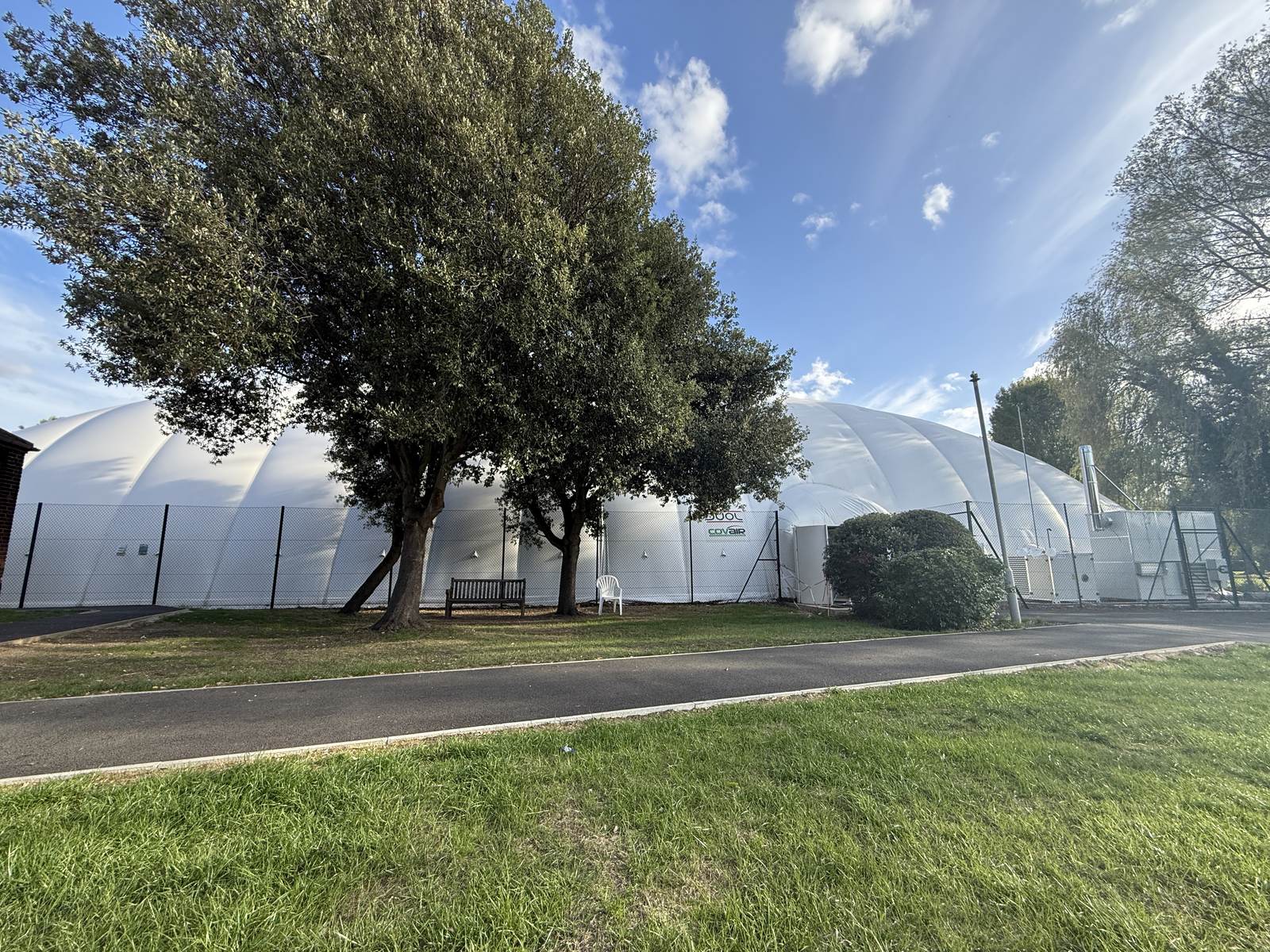
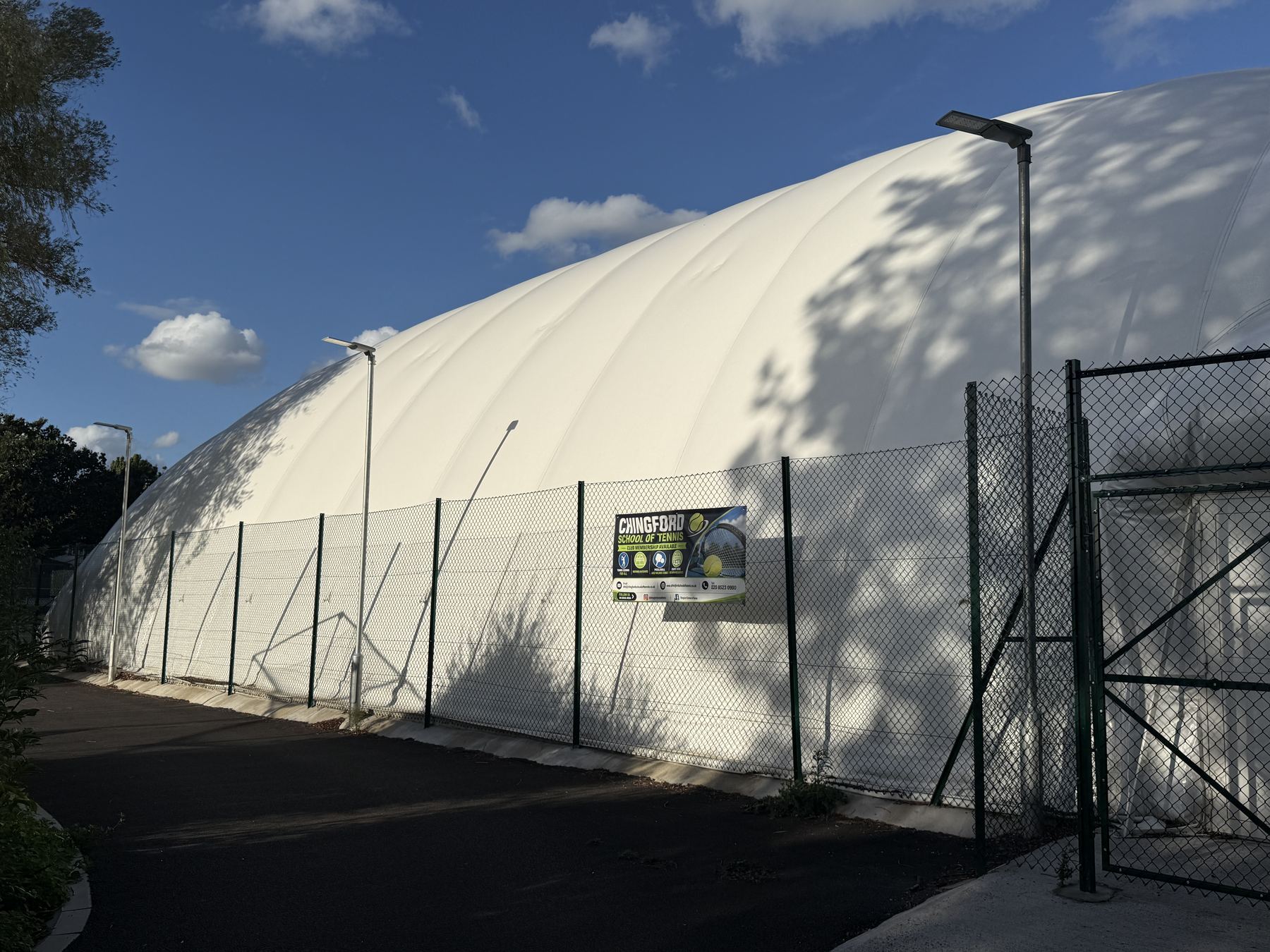
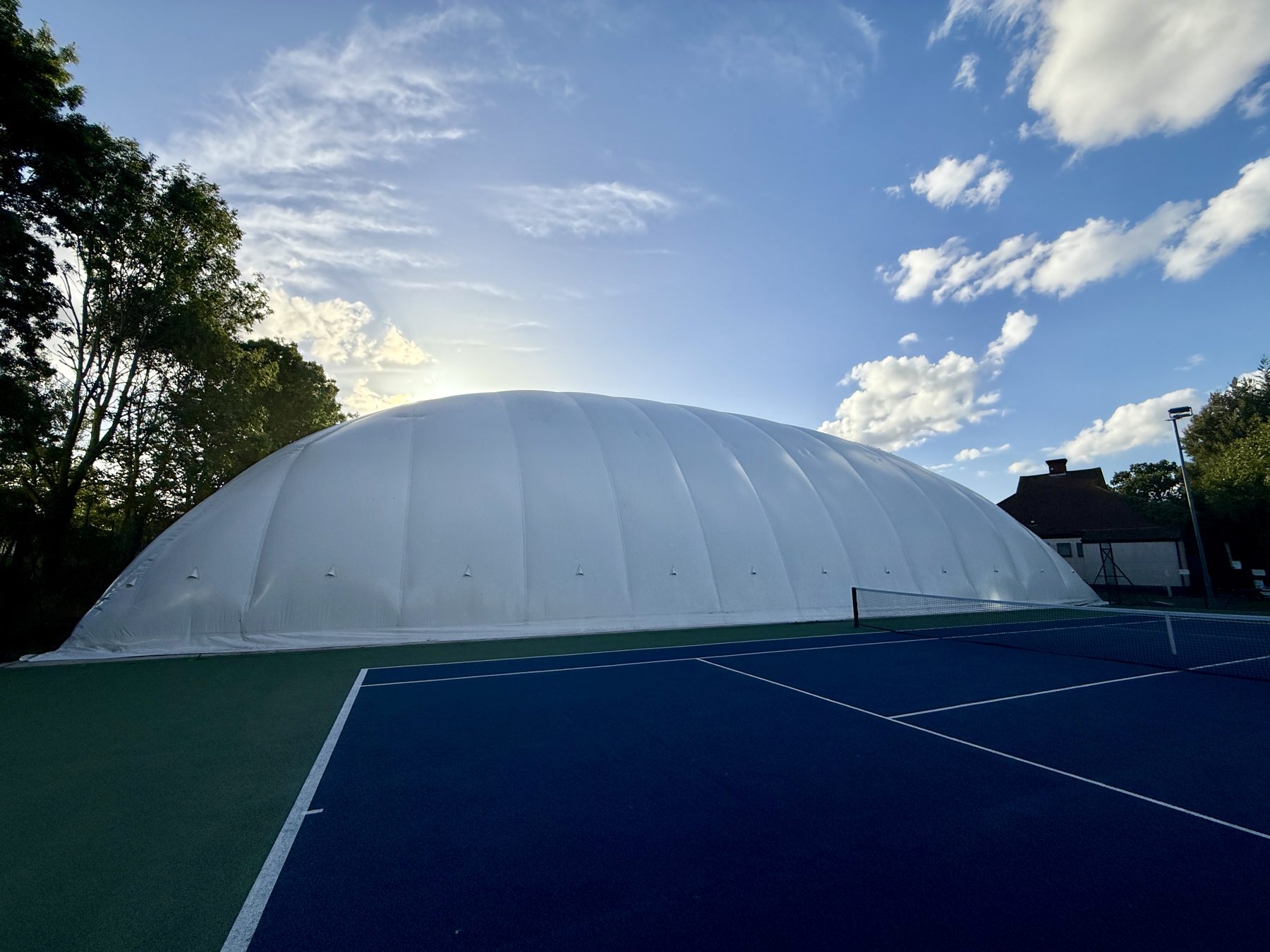
In 2025, an unexpected opportunity emerged when levelling-up funding allocated to the London Borough of Waltham Forest included investment in community outdoor spaces. The council approached the club about upgrading its facilities. With only 48 hours to decide between the options of type of indoor courts, Hilary chose a Duol double-skin insulated air dome over three of the outdoor courts. The wider project included resurfaced courts, new fencing, pathways and LED lighting, alongside the new permanent air dome — expanding the facility to six indoor courts.
Challenge
Before the installation of the extra air dome, the club faced challenges familiar to many UK tennis facilities: winter weather limiting consistent play, high demand for limited indoor court space, pressure on scheduling, lost revenue during poor weather, and a restricted ability to host larger events.
With only three indoor courts available through the winter, demand frequently exceeded capacity, and unpredictable weather created cancellations that disrupted training. The club needed a solution that would guarantee access while enabling future growth.
Solution
Covair designed and installed a double-skin permanent air dome alongside the existing structure, doubling indoor capacity and transforming year-round usability. The new dome offers greater internal height and volume, a more upright wall design for improved playing space, enhanced wind resistance and stability, and an insulated double-skin membrane that moderates temperature, a professional external aesthetic and expanded indoor court capacity, bringing the total to six indoor courts.
The installation was completed quickly and with minimal disruption to the club’s programme.
Results
Increased participation and programme growth
The expanded indoor capacity has driven growth across the board. Beginner and improver classes have grown for adults and juniors, universities book more courts during the day, local schools run interschool tournaments, walking-tennis programmes have expanded, and adult group classes for improvers/intermediate and advanced players continue to build. Evening and weekend availability has improved markedly — “almost everyone in the area knows that there is availability in the evenings and weekends,” pointed out Hilary.
Reliable year-round play
The double-skin structure provides stability and operational certainty whatever the weather, while the insulated air pocket moderates temperature in both cold and hot conditions. “It becomes almost like a base that you know is always there,” the team explains — a point proven on a hot day when, as Matthew recalls, “all the kids were moaning that it was too hot outside… we went into the dome and it was a perfect temperature.”
Expanded events and new opportunities
With six indoor courts, the club now hosts larger events and broadens its offering. It staged its first Grade 4 LTA tournament, welcoming around 200 entrants over the week, and can now run it annually, plus running many 1 day Grade 4 and 5 LTA Sanctioned Tournaments for juniors and adults. The additional capacity has also opened up new activities such as Pickleball.
Improved player experience
Players noticed the difference in space and environment immediately. “Everyone loves the new dome. They always want to book the new dome first,” Matthew says. The increased height and improved run-back space create a more professional playing environment, enhancing comfort and confidence.
The installation process was seamless and efficient, allowing the club to continue operations with minimal disruption. Within days, the structure was operational, delivering immediate value to the facility. Beyond operational improvements, the new dome represents the continuation of a vision first imagined decades ago. Matthew reflects on what the new facility represents: “It does honestly mean a lot… what my father envisaged and built is being honoured even more from two levels that we could never imagine. He always wanted indoor courts and his next dream was for 3 more permanent indoor courts.”
Summing Up
With six indoor courts, expanded programming and year-round reliability, Chingford School of Tennis is no longer operating around the weather — it is building confidently for the future. The new dome has created room for growth and wider community access, and strengthened foundations laid nearly four decades ago.