Skip to content

Billericay Lawn Tennis Club


At Billericay Lawn Tennis Club (LTC), winter no longer dictates when or how tennis is played. With Covair’s seasonal air domes in place, the coldest months have been transformed from a period of disruption and uncertainty into a time of growing membership and sustained player development.
Covair’s seasonal air domes demonstrates how clubs can enhance operations, gain momentum, and prevent weather from cancelling tennis. All without resorting to permanent infrastructure.


Background
With a rich history dating back to the 1930s, Billericay LTC is one of the largest performance clubs in Essex. It has more than 600 members and is home to three professional coaching teams. The club has ten floodlit courts, five of which are covered from October to March by Covair seasonal air domes.
Thanks to Covair’s domes, winter no longer signals a slowdown. Instead, it marks one of the busiest times of the year. “Before Covair, we didn’t have any meaningful winter membership. But that’s all changed,” explains Lester Galley, the club’s Chairman and Director. “It means we’re on a different curve to other clubs, but our membership actually grows.”
Challenge
Before installing Covair’s domes, coaching programmes continued throughout the winter but were disrupted. “We’d lose nearly a third of sessions despite having all-weather courts,” Lester recalls.
“The kids and the adults are a fairly hardy bunch,” says Rebecca Wright, the club’s Head of Junior Tennis. “They would play in most conditions unless it’s really terrible. But it’s the consistency that’s key. I don’t have to add extra coaching time at the end of the winter to make up for lost time.”
“Being able to guarantee quality training sessions and not fighting on through the bad weather is a massive win for the coaches and club members. And,” she admits, “I certainly don’t miss the rain or the windchill in the depths of winter.”
“The parents really appreciate the domes as well,” Lester adds. “It makes it so much simpler for them to keep track of their diaries, and they no longer have to worry about last-minute cancellations.”


Solution
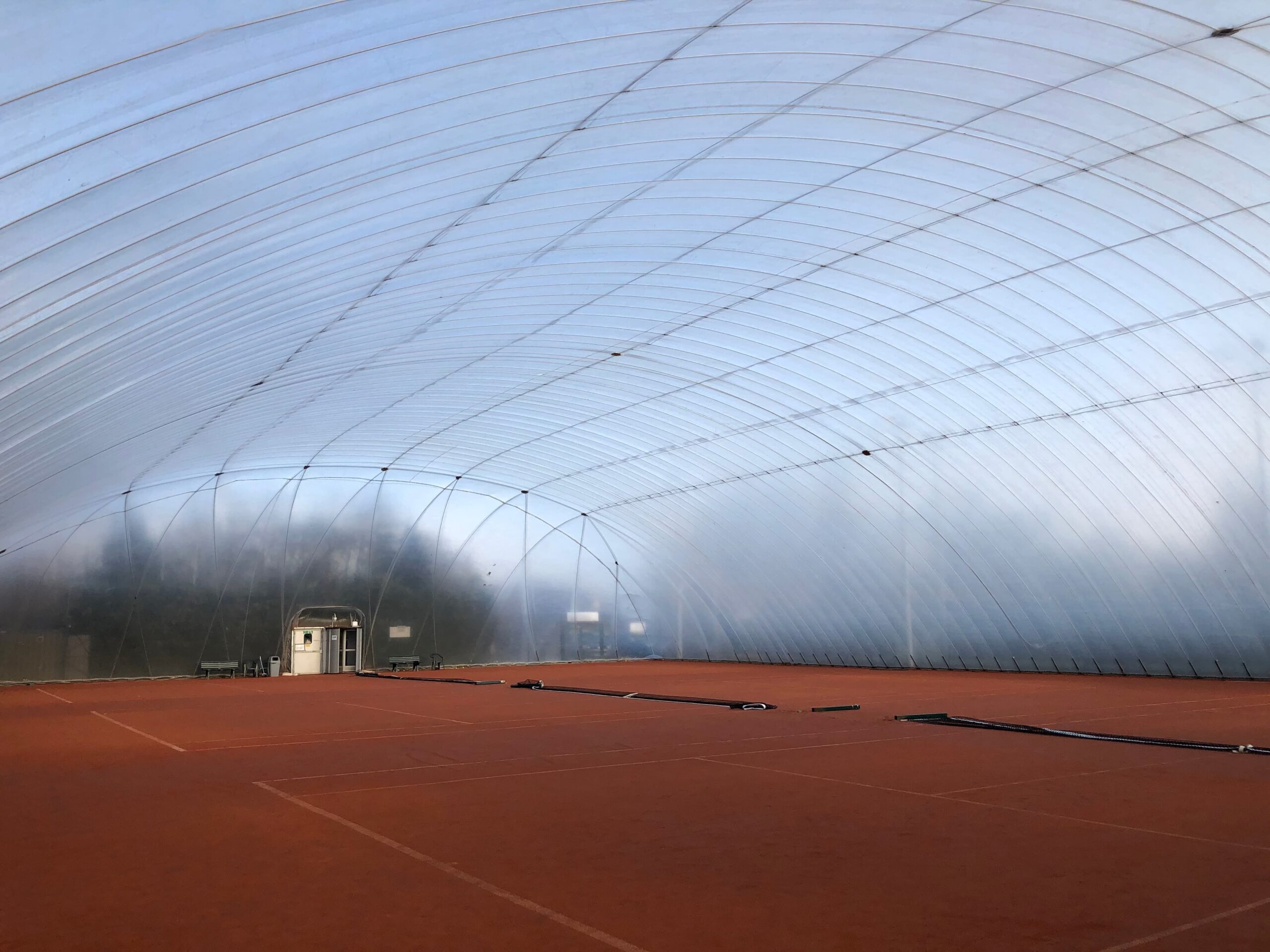
Billericay LTC installed two Covair seasonal air domes. One covers three courts, and the other covers two. “We have planning permission for six months each year, so they go up in October,” Lester explains. “Then they come down either the last week in March or the first week of April.”
This annual cycle, now part of the club’s rhythm, balances open-air summer tennis with dependable winter cover. “There’s a strong economic argument for seasonal air domes, too,” Lester explains. “Covair makes commercial sense for us. Their domes make winter tennis economically viable. You could easily spend much more on permanent structures, but then you’d have the worry about recouping the investment.”
Rebecca also sees the economic benefits: “I don’t think you can earn a successful living in the UK as a tennis coach if your club doesn’t have a dome,” she reflects. “It guarantees your programme, your hours, and your living.”
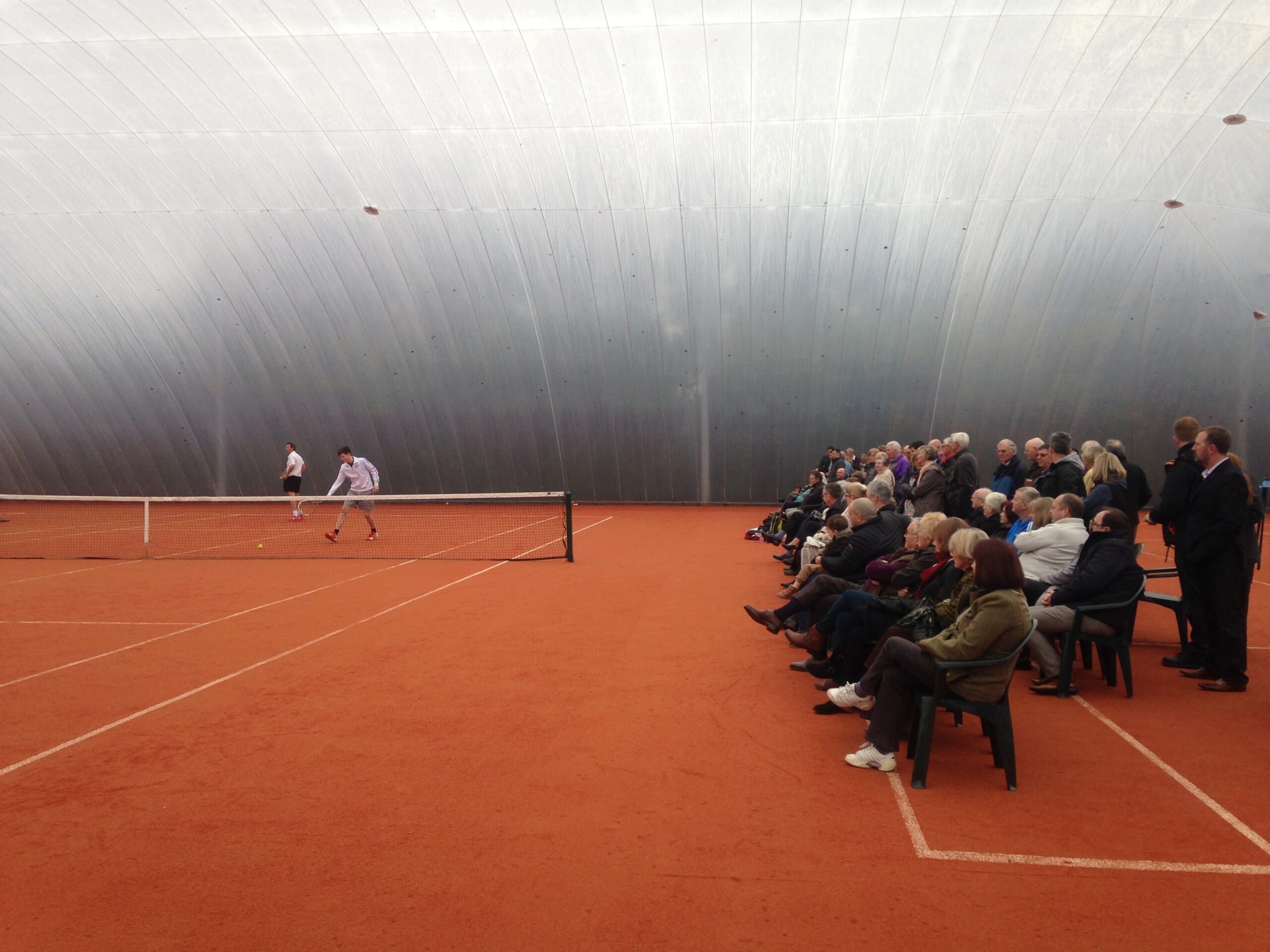
But she’s keen to stress that it’s not just an economic choice: “For coaches and players, the experience inside the domes exceeded expectations. They’re a lot brighter than I thought they would be and a lot bigger than I imagined. You think you’re going to feel squashed, but you don’t. The height’s wonderful and there’s plenty of space, so you don’t feel any form of restriction.”
For younger players, first impressions are immediate and always positive. “They go, oh wow! It’s huge,” she remarks. “They’re just happy to be protected from the elements.”
Lester, who played and ran the first team for 25 years, is also a strong advocate of playing winter tennis under Covair’s domes. “I love it,” he comments without hesitation.
Results
When the evenings draw in and the floodlights come on, Billericay is a hub for winter tennis, with juniors, performance players, and members playing, practising, and improving their game.
Demand for covered courts is consistently high. To ensure fairness, junior groups rotate each term so that as many players as possible benefit. “Everybody’s fighting to get in there,” Rebecca says.
“If you look at the club’s booking schedule, you’ll see that the domed courts are packed all the way through the winter,” Lester adds. “It’s unbelievable, but we are disciplined. We balance coaching sessions and leave slots available for members to book, too.”
That reliability has transformed player development. Billericay now supports around 400 juniors aged three to eighteen, delivered by Rebecca, Helen, Alex and a wider coaching team, with clear pathways through to county, national and international competition. Notable names include Edie Griffiths and Haqim Kamal.
“The top kids obviously get dedicated hours,” Rebecca explains. “They’re allowed to come out of school, and, because of our domes, we can put those sessions on for them throughout the year. Without them, we’d have to send those juniors off to an indoor centre, or they’d end up going to another club.”
“In fact,” Lester adds, “since installing our domes, we’ve actually increased the number of regional, national and international professional players at the club.”
Summing Up
Covair’s seasonal air domes deliver consistency and reliability at every level of the club, from grassroots juniors taking their first swings to performance players training for national and international competitions. By guaranteeing court time during the toughest months of the year, the domes have strengthened coaching programmes, protected coach incomes, and created new revenue through winter membership.
The result is a club that doesn’t batten down the hatches when winter arrives with icy winds and driving rain. Instead, play continues, techniques are honed, members get to play their favourite game, and everyone stays fit and active. It’s proof that year-round tennis is achievable without permanent indoor facilities.
“There’s no doubt that we’re as successful as we are because of our domes,” Rebecca concludes. “If your club is considering a similar project, I’d say go for it. It’s a no-brainer from my perspective.”