
Padel in the UK has moved past the “early adopter” phase and is now officially in overdrive. We’re seeing a classic land grab: operators are racing to secure sites and build communities before the competition arrives. But here’s the reality check: in this market, being first doesn’t matter nearly as much as being right. As the sector matures, the winners won’t just be the ones who put rackets in hands; they’ll be the ones who understood how British weather, smart engineering, and player experience actually drive the bottom line. At Covair, we spend our time at the intersection of these variables, helping investors sidestep the “hidden” mistakes that can quietly bleed a project dry.
The biggest elephant in the room is, predictably, the British weather. It’s the single most underestimated factor in padel economics. In sunnier climates, outdoor courts are a no-brainer. In the UK, rain, humidity, and cold aren’t just inconveniences—they are revenue killers. When the glass gets wet, the ball skids, the rebound becomes unpredictable, and the game loses its magic. Uncovered courts consistently see a massive drop-off in playable hours during the shoulder seasons and winter. That’s not just a technical issue; it’s a commercial one. Covered environments turn padel from a seasonal gamble into a dependable, year-round infrastructure asset.
This choice between covered and uncovered fundamentally changes your business trajectory. An outdoor court behaves like a summer attraction—great when the sun is out, but dormant when it’s not. A covered court, however, is a high-utilization asset. It allows for reliable coaching pathways, consistent league play, and a brand that players can trust regardless of the forecast. Over a full year, the revenue gap between these two models is often staggering. The smartest operators aren’t waiting to see how much revenue they lose to rain before they pivot; they’re building for the UK climate from day one.

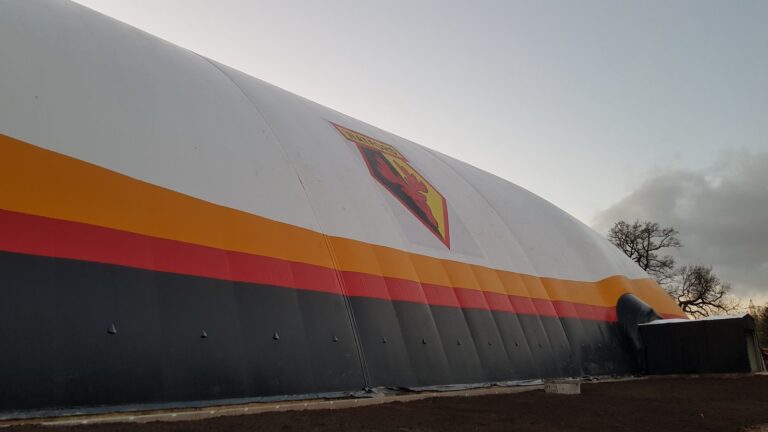
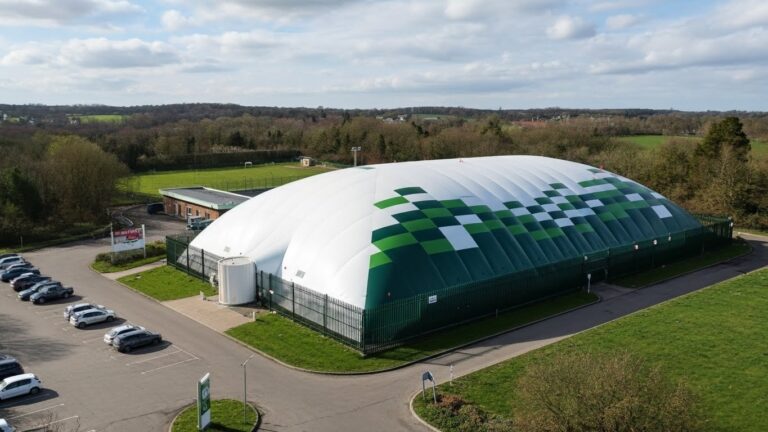
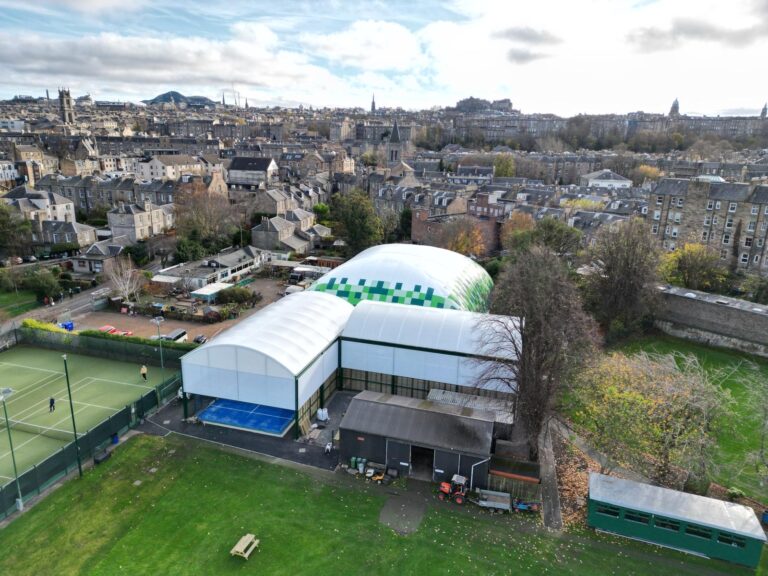
Air domes provide a pristine, all-weather surface for sports like padel and tennis.
Of course, everyone wants to open fast, but “speed-to-market” is often misunderstood. Real speed isn’t about rushing the build; it’s about removing the friction that causes projects to stall. Most delays happen long before a shovel hits the ground—usually during the planning phase. Incomplete documentation, imported structures that don’t meet UK codes, and acoustic objections can add months of costly delays. We’ve found that using planning-ready, UK-compliant engineering is the only real “shortcut.” It gets doors open sooner and cash flowing earlier.
Ultimately, the goal is to create high-value, loyal players. Padel is a game of rhythm and physics. When a player knows exactly how the ball will behave off the glass every time they step on court, they improve faster and engage more. By controlling the environment, you aren’t just preventing cancellations; you’re creating a better product. The most successful projects we see are the ones that treat padel as a hospitality and venue business, not just a court installation. As we enter this defining decade for the sport, the operators who build for the reality of the UK climate will be the ones who turn this boom into a sustainable, long-term legacy.